
Rainbow Bridge National Monument, Utah

National Monument

Rainbow Bridge National Monument

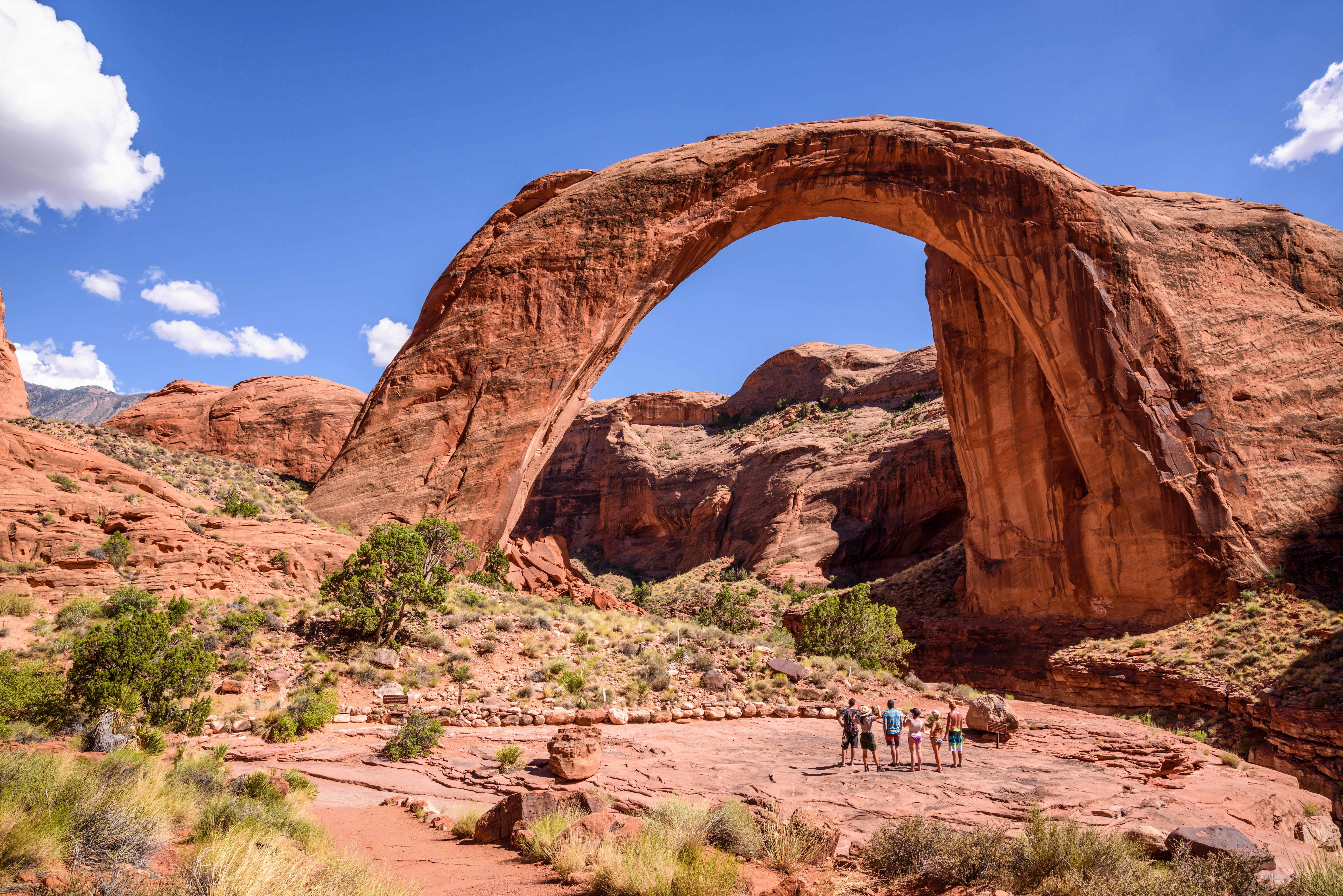
Rainbow Bridge is one of the world's largest known natural bridges. The span has undoubtedly inspired people throughout time--from the neighboring Native American tribes who consider Rainbow Bridge sacred, to the thousands of visitors from around the world who visit it each year. Please visit Rainbow Bridge in a spirit that honors and respects the cultures to whom it is sacred.

Official NPS page

Park Closure: No dock access to Rainbow Bridge

At current lake levels, Rainbow Bridge docks do not reach the land. Dock-to-trail access to Rainbow Bridge will not be available until water levels rise again. Restrooms at the dock will remain open. This alert will stay up until the situation changes. Check the link for current lake information.

Hours

Rainbow Bridge National Monument is open every day of the year, from sunrise to sunset. On rare occasions, the park may be closed for visitor safety while significant trail and/or dock repairs are taking place. Contact the park for up-to-date information on any closures in effect. Overnight camping or docking your boat is prohibited.

Entrance fees

No entrance fee listed.

Getting there

Rainbow Bridge National Monument is located between Glen Canyon National Recreation Area and the Navajo Nation. *There are no roads to or near the monument.* Rainbow Bridge can be reached by boat on Lake Powell or by hiking one of two trails around Navajo Mountain on the Navajo Nation, by permit only. Boat tours are available. The entrance to Forbidding Canyon is located at buoy 49 on Lake Powell. Boaters should be familiar with the Aids to Navigation (buoy) system and use a navigational map.

Places to see
Rainbow Bridge

Rainbow Bridge

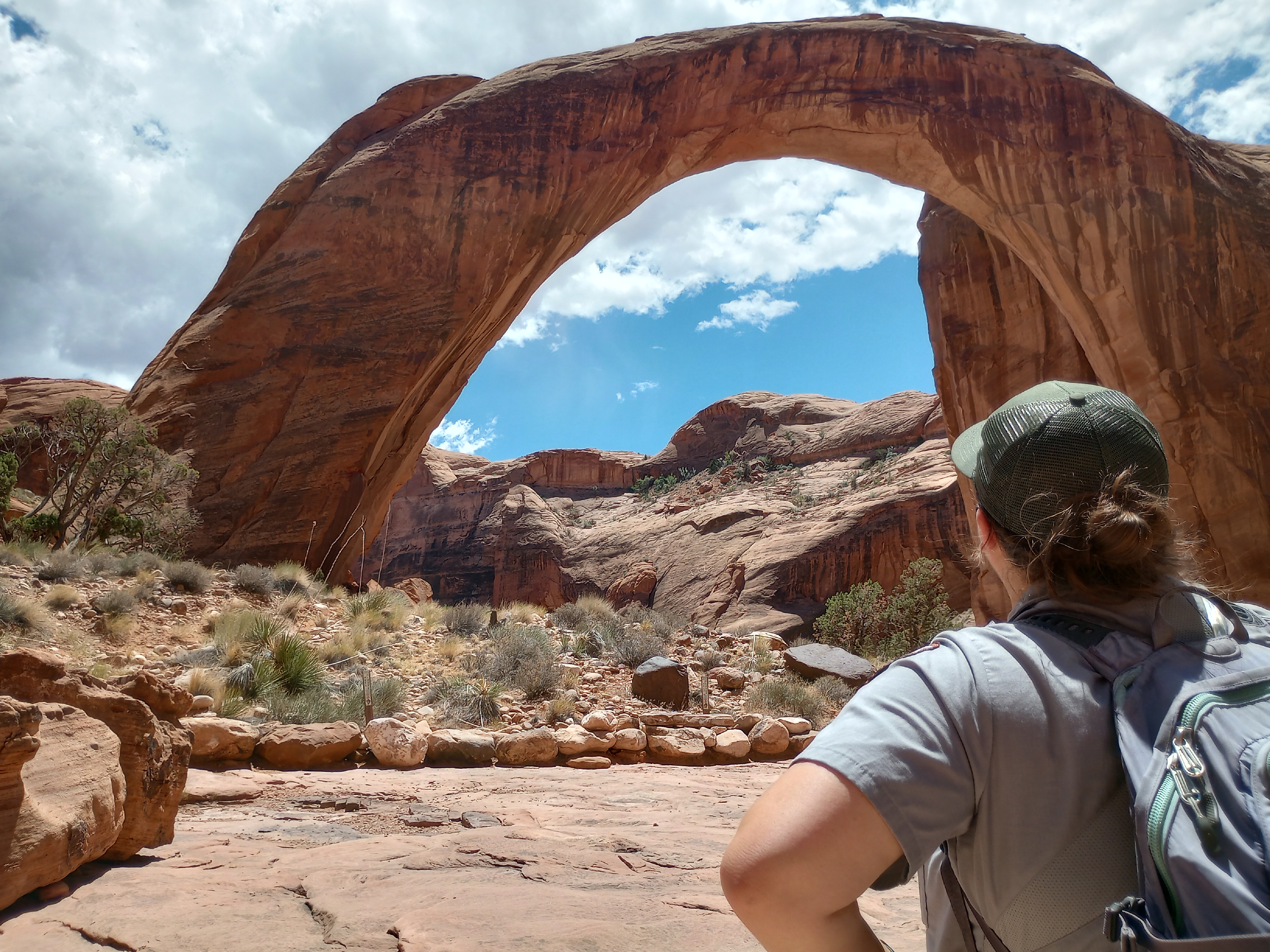
A Rainbow Made of Stone Encompassing just 160 square acres of land, Rainbow Bridge National Monument is one of the smallest units of the National Park Service. However, what it lacks in size it more than makes up for with an abundance of unique and interesting features. The primary feature is, of course, Rainbow Bridge itself, one of the largest natural bridges in the world. From the time the bridge became known to the outside world in the early twentieth century, thousands of people from around the world have visited each year. From its base to the top of the arch, it is 290 feet -nearly the height of the Statue of Liberty- and spans 275 feet across the river; the top of the arch is 42 feet thick and 33 feet wide. There is no visitor center or ranger station at Rainbow Bridge. All of Rainbow Bridge's Passport Stamps are physically located at Glen Canyon's various visitor centers.   Rainbow Bridge is closed from sunset to sunrise. Camping within the boundaries of Rainbow Bridge National Monument is prohibited. Getting to the bridge requires hiking at least a mile. Visitors can take the trail from the courtesy dock to the viewing area for the bridge. Exact trail length varies with lake levels. We ask that visitors respect the religious significance of Rainbow Bridge to neighboring tribes and consider viewing Rainbow Bridge from the viewing area or using the designated trail to walk around rather than walking up to or under the bridge. Remember to carry water with you! This is a desert environment and even short hikes require preparation. Wear good shoes if you choose to hike the trail. Loose, light-colored clothing, sunscreen, and a hat are recommended. There is no drinking water available at the dock or at Rainbow Bridge, bring more than you think you will need. There are two shade shelters along the trail with benches that make great rest/reflection points. Pack out what you bring in. There are no facilities or trash receptacles along the trail to Rainbow Bridge in any direction. Leave this land better than you found it - take all trash you make back with you. Getting to the Monument Rainbow Bridge is only accessible by boat on Lake Powell or by land over a 14+ mile trail from the Navajo Nation. There are no roads to Rainbow Bridge.   By Boat Trips to Rainbow Bridge may be made across Lake Powell in Glen Canyon National Recreation Area using private, rental, or tour boats. From Wahweap or Antelope Point, travel north. From Bullfrog and Halls Crossing, travel south. Proceed to the mouth of Forbidding Canyon (buoy 49), where a floating sign on the right marks the canyon entrance. Follow the canyon about 2 miles (4 km) to another sign that points the way left through a narrow passage. Proceed with caution! Beyond the wakeless buoys, go slowly so that no wakes, or waves, are made. Tie up at the courtesy dock then start walking. No vessels permitted past the docks. At current lake levels, the dock at Rainbow Bridge does not reach land. Beach your boat and walk through muck to the trail at your own risk. The docks can be reattached to the Rainbow Bridge trail when the lake level is about 3548' By Hike You may backpack to Rainbow Bridge across Navajo Nation lands. A permit from the Navajo Nation is required.  

Park stories

Park information courtesy of the National Park Service Data API.