

National Monument
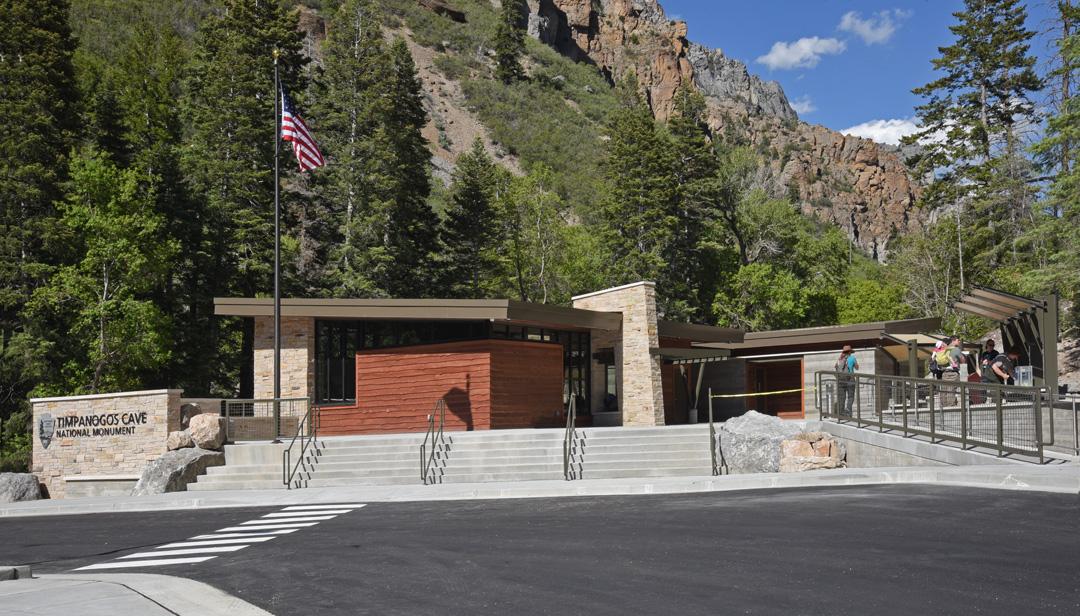
Timpanogos Cave National Monument
The visitor center, caves, and cave tours have not yet opened for the 2026 season. Hike your way past stunning vistas to explore a hidden underground world. Taste the thrill of caving as you twist and bend to enter beautifully decorated rooms. Learn the science behind formations and hear stories of cave exploration and preservation. Experience and discover as you go – geologic mysteries await
Official NPS pageInformation: WNP Bookstore is Cashless
The Western National Parks (WNP) bookstore has moved to a cashless operation at Timpanogos Cave National Monument. Purchases can be made with credit and debit cards as well as contactless payment methods including Google Pay, Apple Pay, and Samsung Pay.
Caution: Tickets are required to enter Timpanogos Cave
Reservations are strongly recommended. Reservations are the only way to ensure a spot is available for your party. Please plan accordingly by visiting Recreation.gov to secure your tickets in advance. Availability of walk-up tickets is not guaranteed.
Hours
The Visitor Center is currently open for the season.
Entrance fees
Timed Entry Reservation - Location: $12.00 · Timed Entry Reservation - Location: $17.00 · Timed Entry Reservation - Location: $22.00
Getting there
From I-15: Take Exit 284 (Alpine-Highland exit), turn east on State Highway 92 and proceed ten miles (16km) to the monument. UT 40 or U.S. 189: Travel UT 189 through Provo Canyon, west on Orem 800 North (UT 52). After 2.4 miles turn right on State Street UT- 89. After 3.8 miles, turn onto Pleasant Grove 100 East (UT 146). Stay on this road for almost five miles, as it turns in Canyon Road and takes you to the mouth of American Fork Canyon. Turn right up American Fork Canyon to visitor center.
Things to do
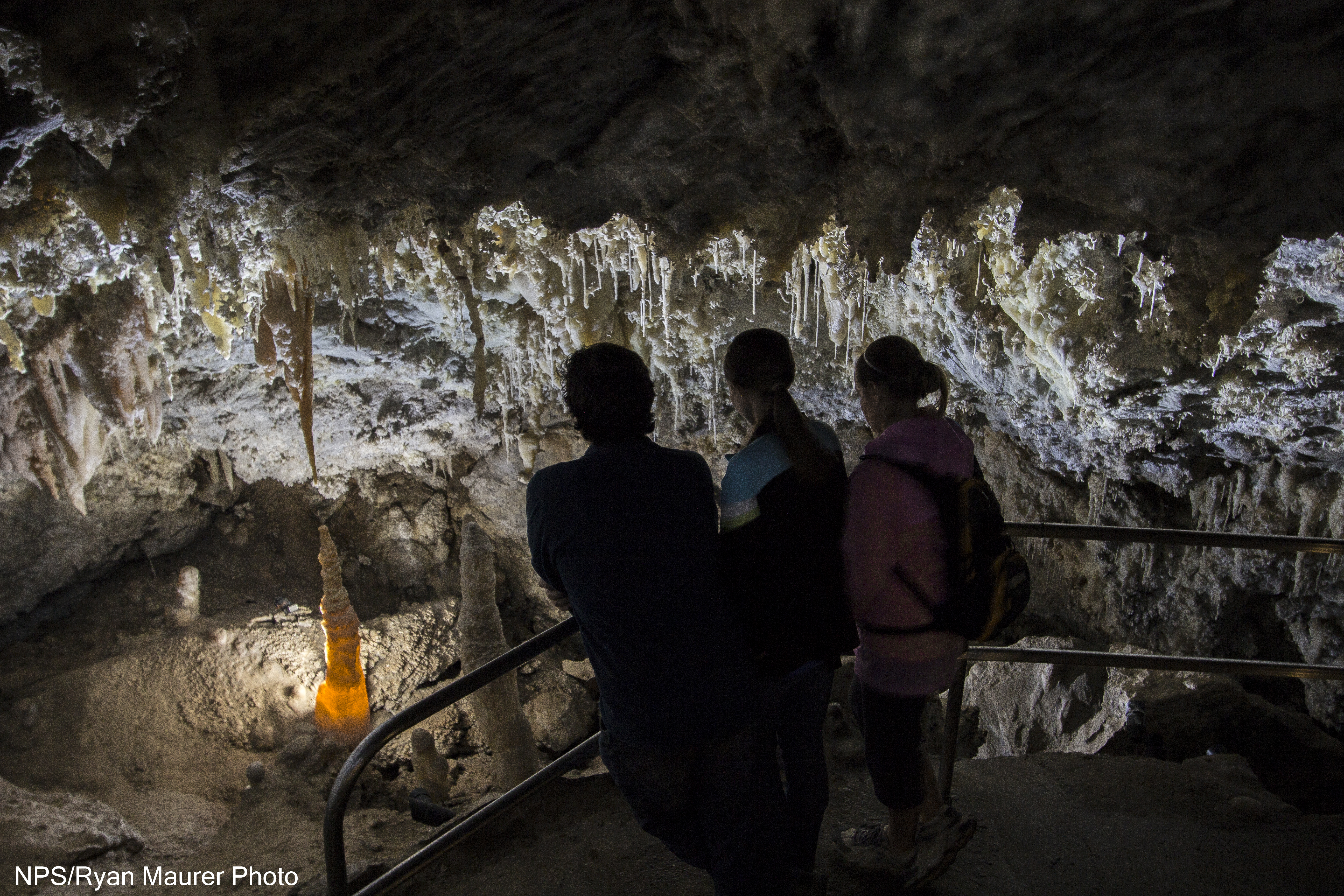
Cave Tour
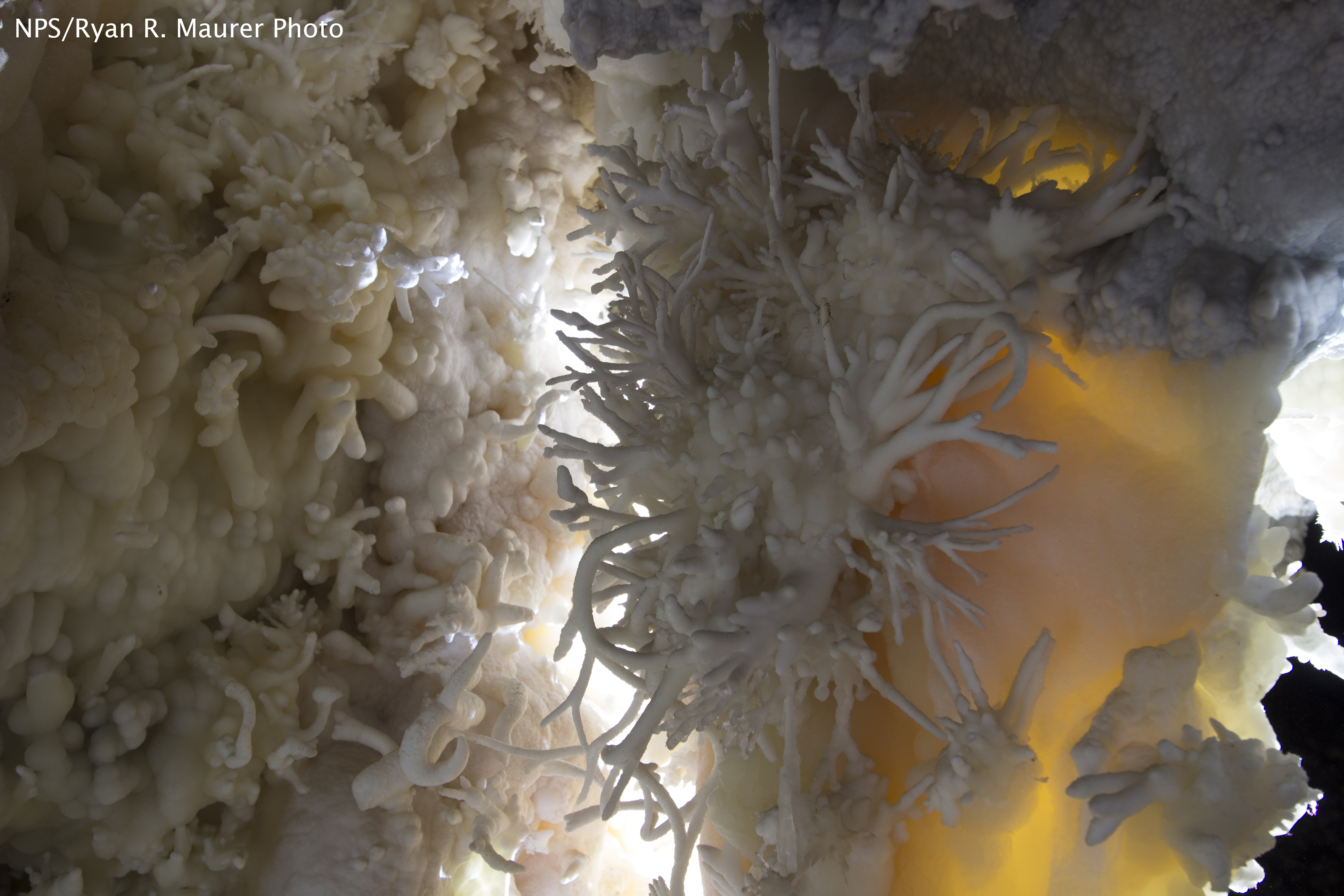
Join a ranger for a 55-minute cave tour through the Timpanogos Cave system. Enjoy the cool, damp, air, marvel at the delicate, colorful, formations and learn about the million-year process that has created these unique caverns.
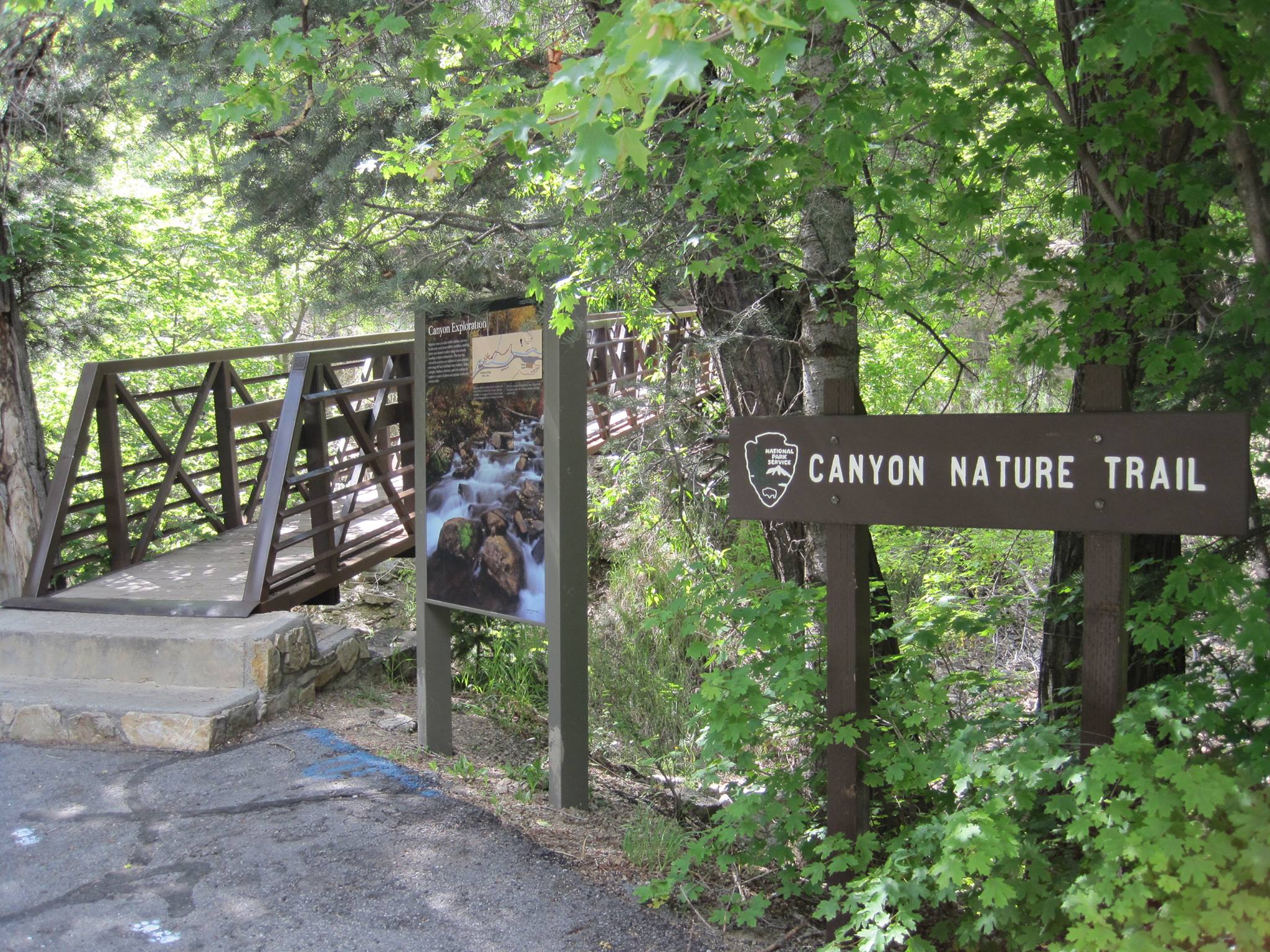
Walk the Canyon Nature Trail
Take a walk along the American Fork river on the north side of the canyon. This side of the canyon features wildlife and plants not found on the south side. There are several interpretive signs along the trail and benches to rest on. You can also view the cave entrance roughly 1,000 feet higher and across the canyon using an installed scope.
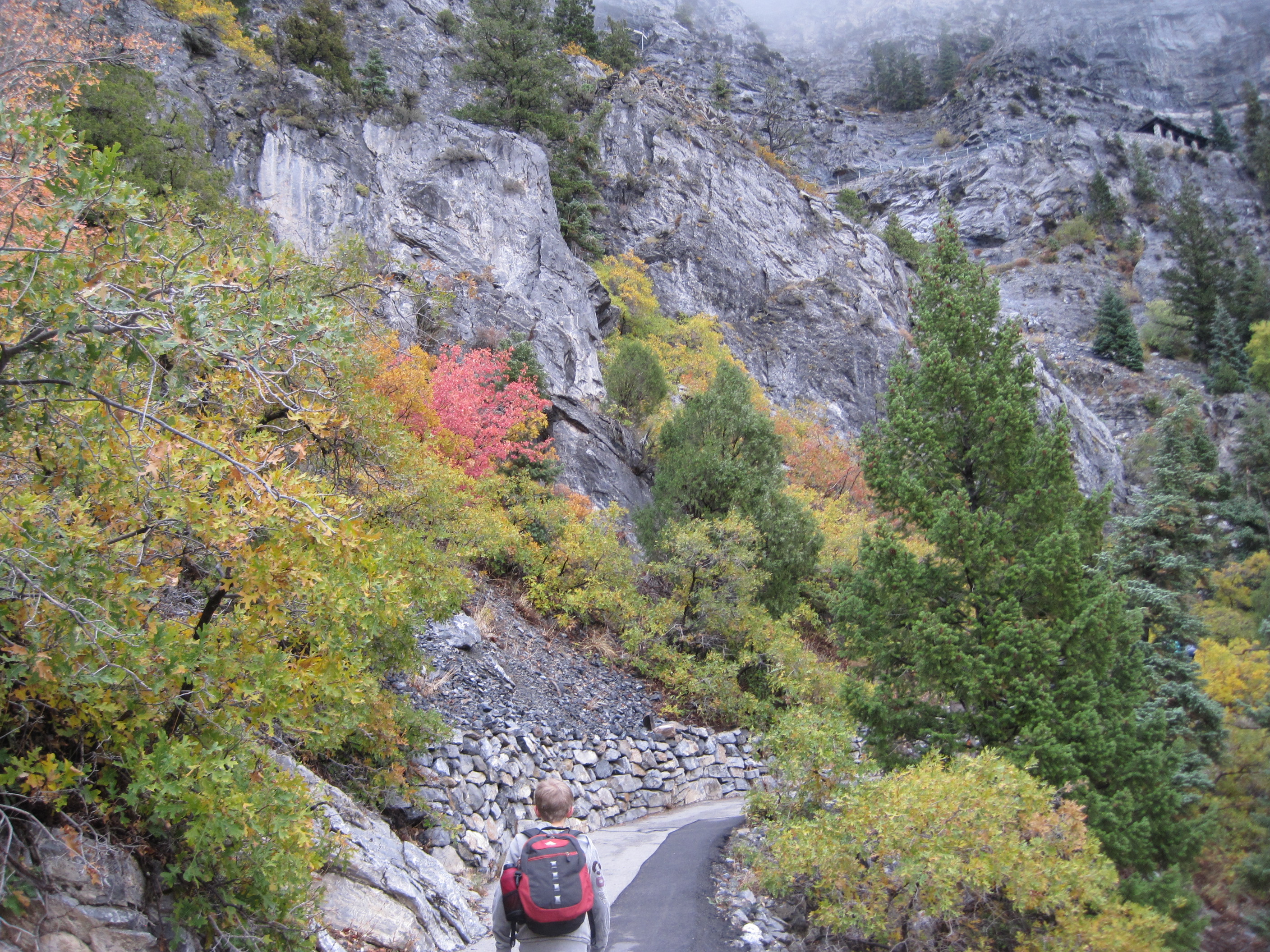
Hike the Cave Trail
The Timpanogos Cave Trail is 1.5 miles each way and gains 1,100 vertical feet. Hike past thousands of years of geologic history while enjoying breathtaking vistas and the natural sounds of the park. Plan on approximately 2-2.5 hours roundtrip.
Places to see
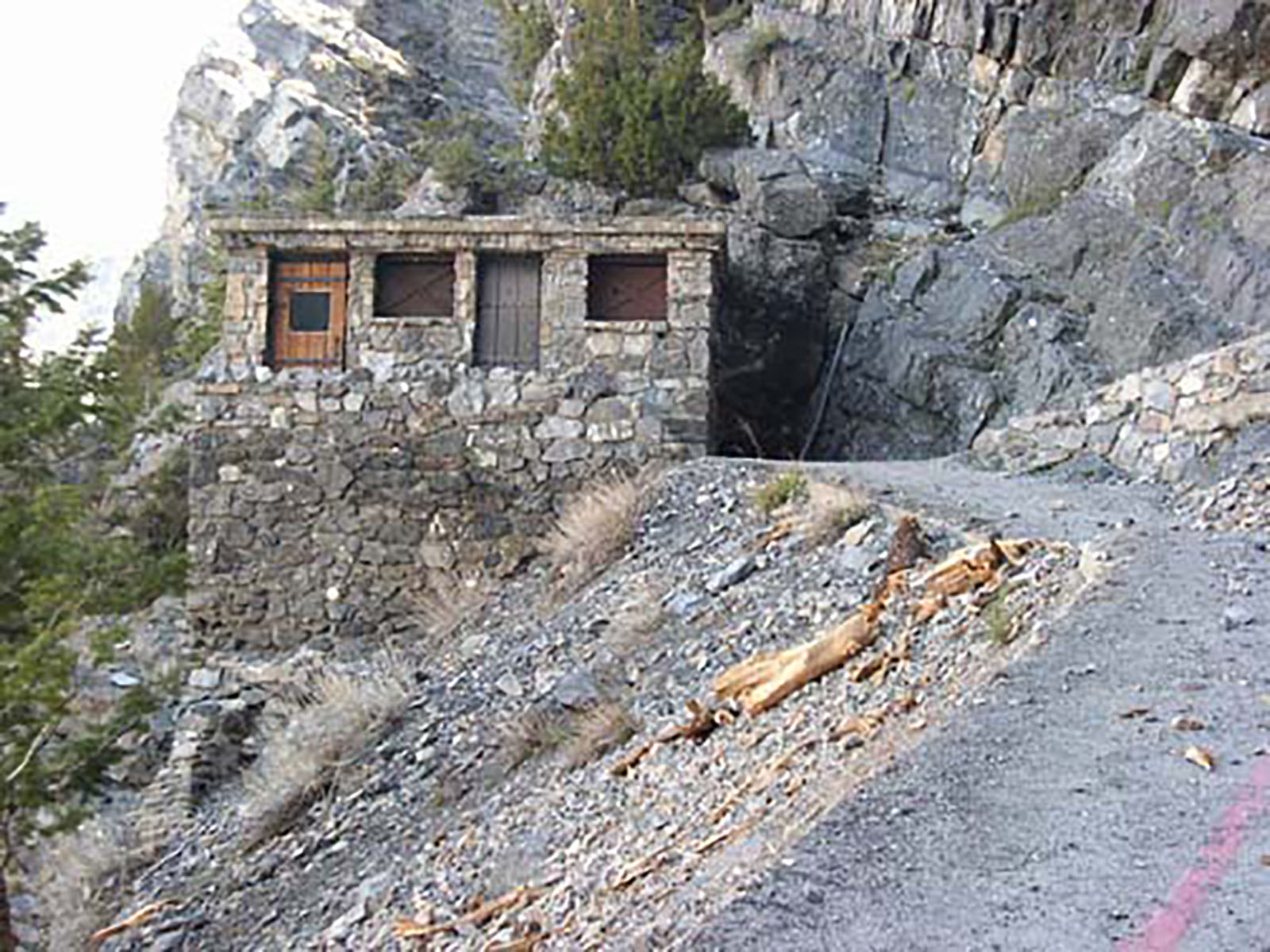
Last Chance Outhouse
Last Chance Outhouse is one of the protected, historic buildings within the park. Although there are no flushing toilets, running water, or garbage cans there are several stalls and hand sanitizer. This is the only restroom on the trail and it is a highly recommended stop for those going on the tour as the caves are cold, wet, and drippy.
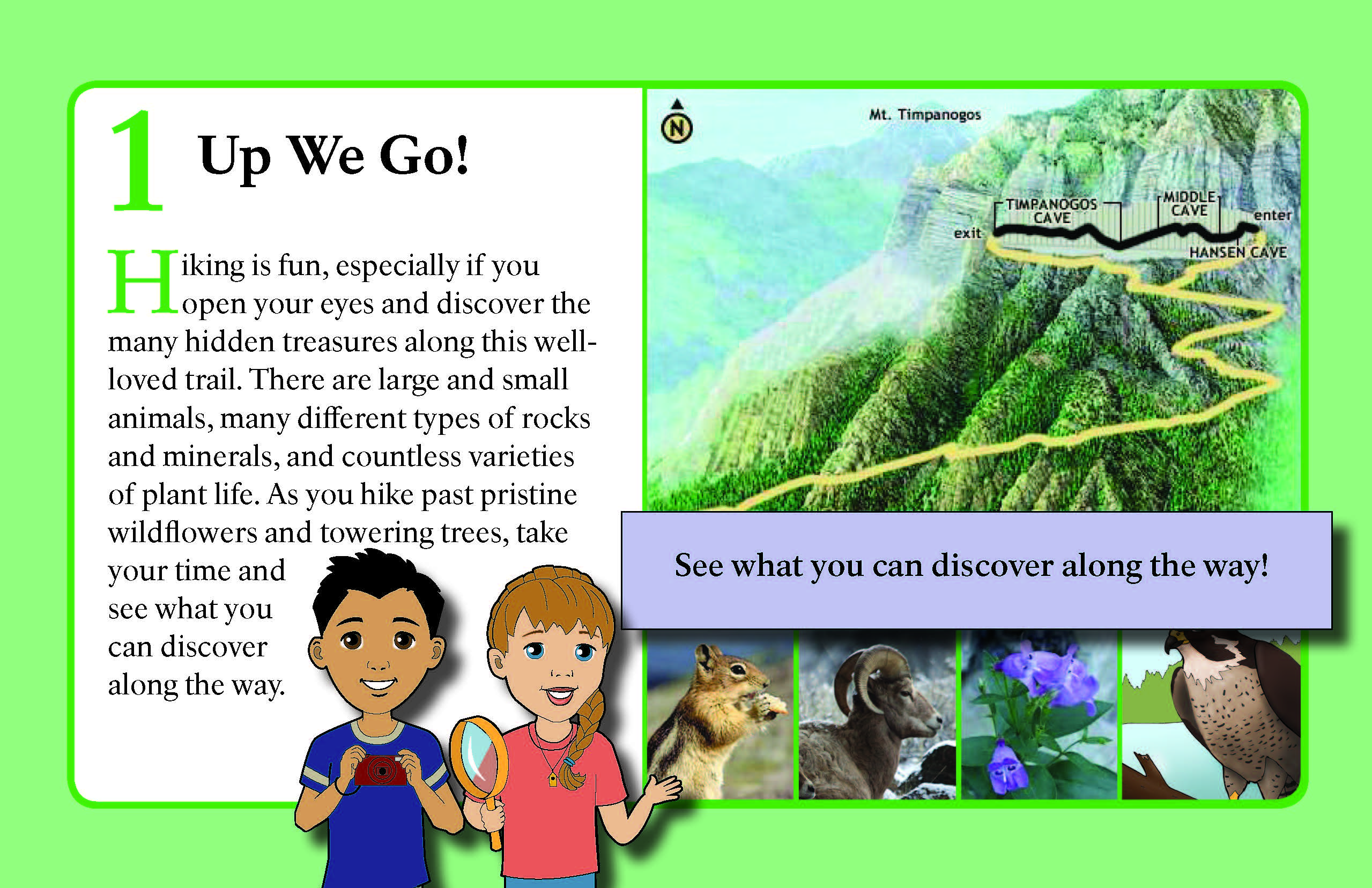
Along the Way #1
1 - Up We Go! Hiking is fun, especially if you open your eyes and discover the many hidden treasures along this well-loved trail. There are large and small animals, many different types of rocks and minerals, and countless varieties of plant life. As you hike past pristine wildflowers and towering trees, take your time and see what you can discover along the way.
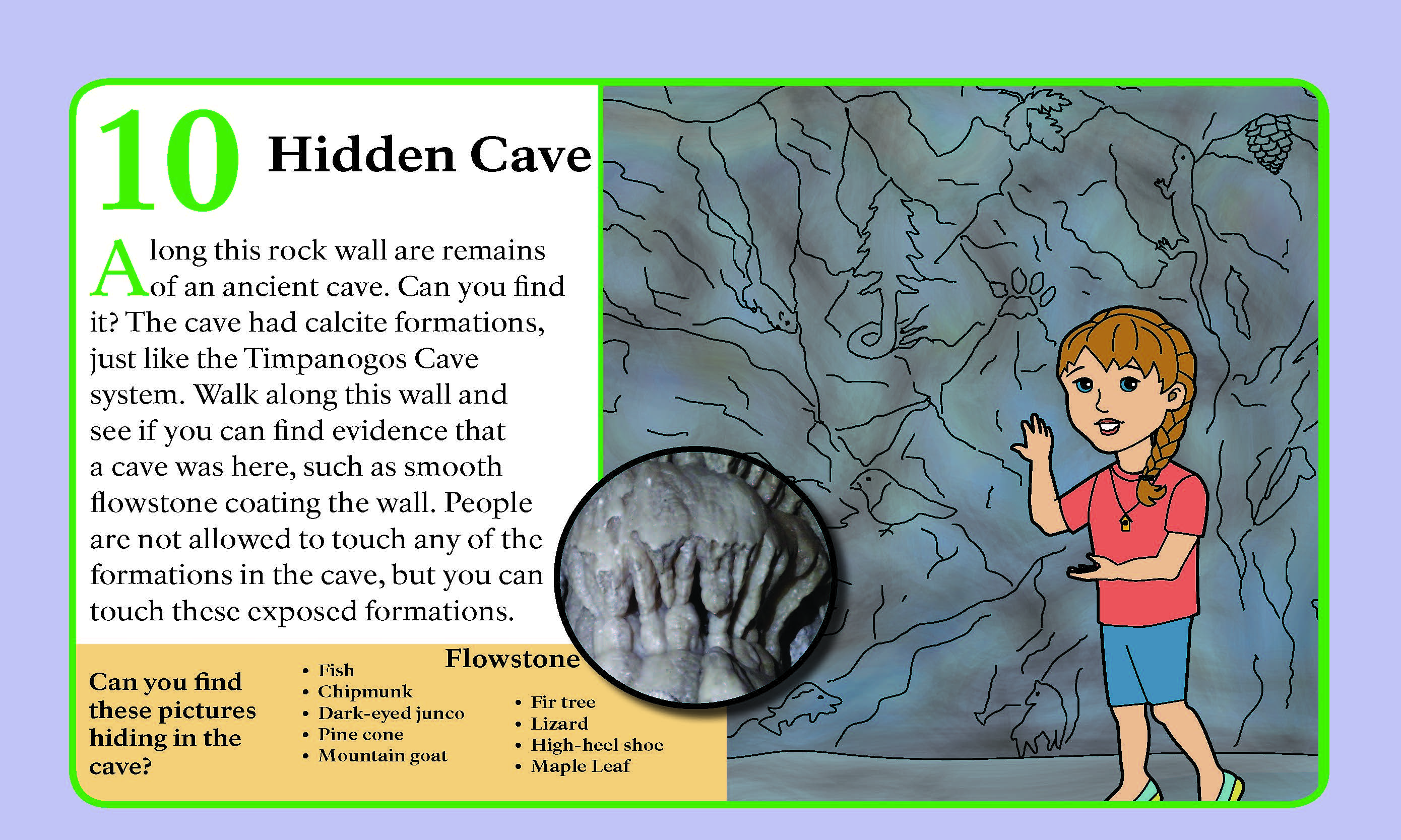
Along the Way #10
Hidden Cave Along this rock wall are remains of an ancient cave. Can you find it? The cave had calcite formations, just like the Timpanogos Cave system. Walk along this wall and see if you can find evidence that a cave was here, such as smooth flowstone coating the wall. People are not allowed to touch any of the formations in the cave, but you can touch these exposed formations.
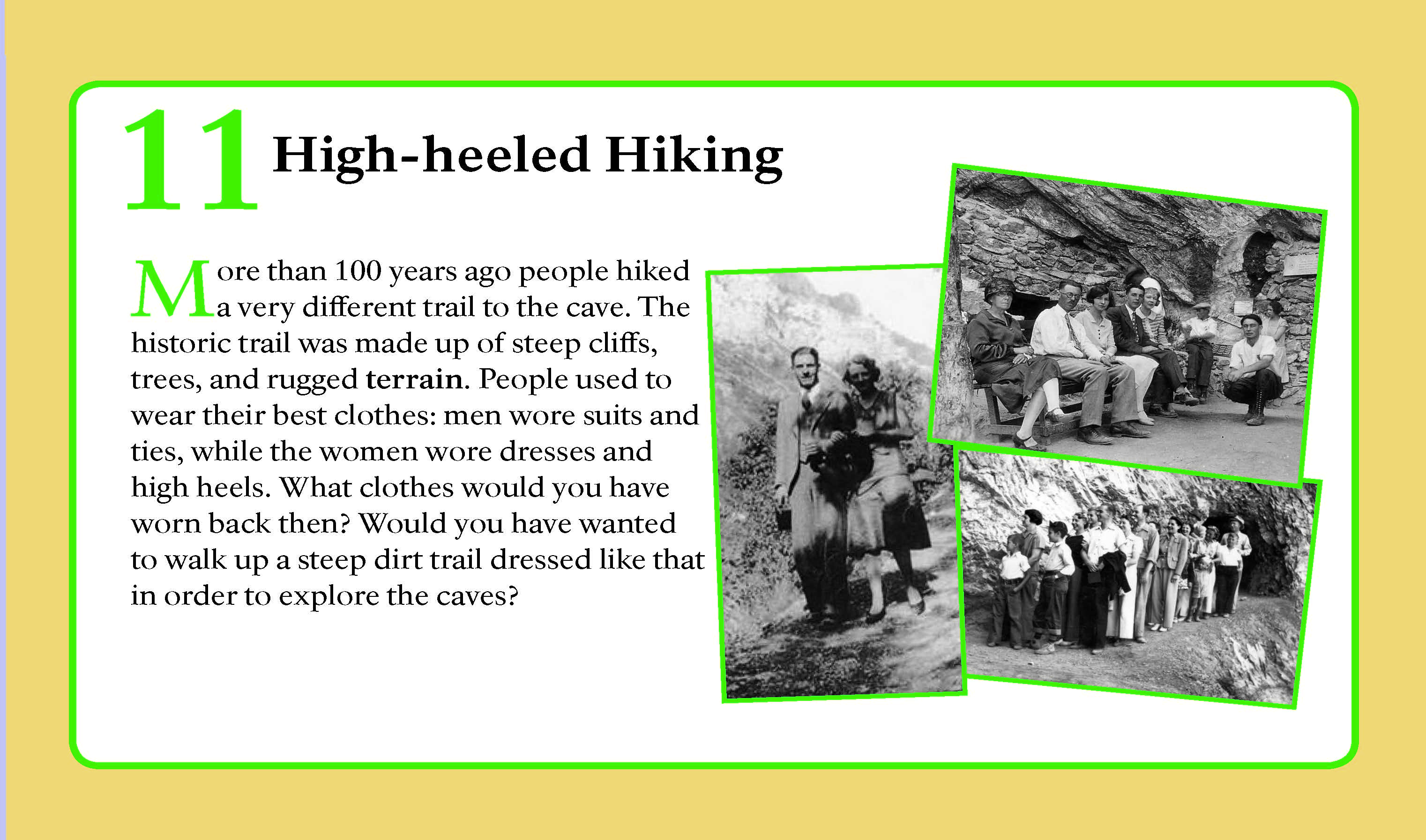
Along the Way #11
11. High-heeled Hiking More than 100 years ago people hiked a very different trail to the cave. The historic trail was made up of steep cliffs, trees, and rugged terrain. People used to wear their best clothes: men wore suits and ties, while the women wore dresses and high heels. What clothes would you have worn back then? Would you have wanted to walk up a steep dirt trail dressed like that in order to explore the caves?
Along the Way #12
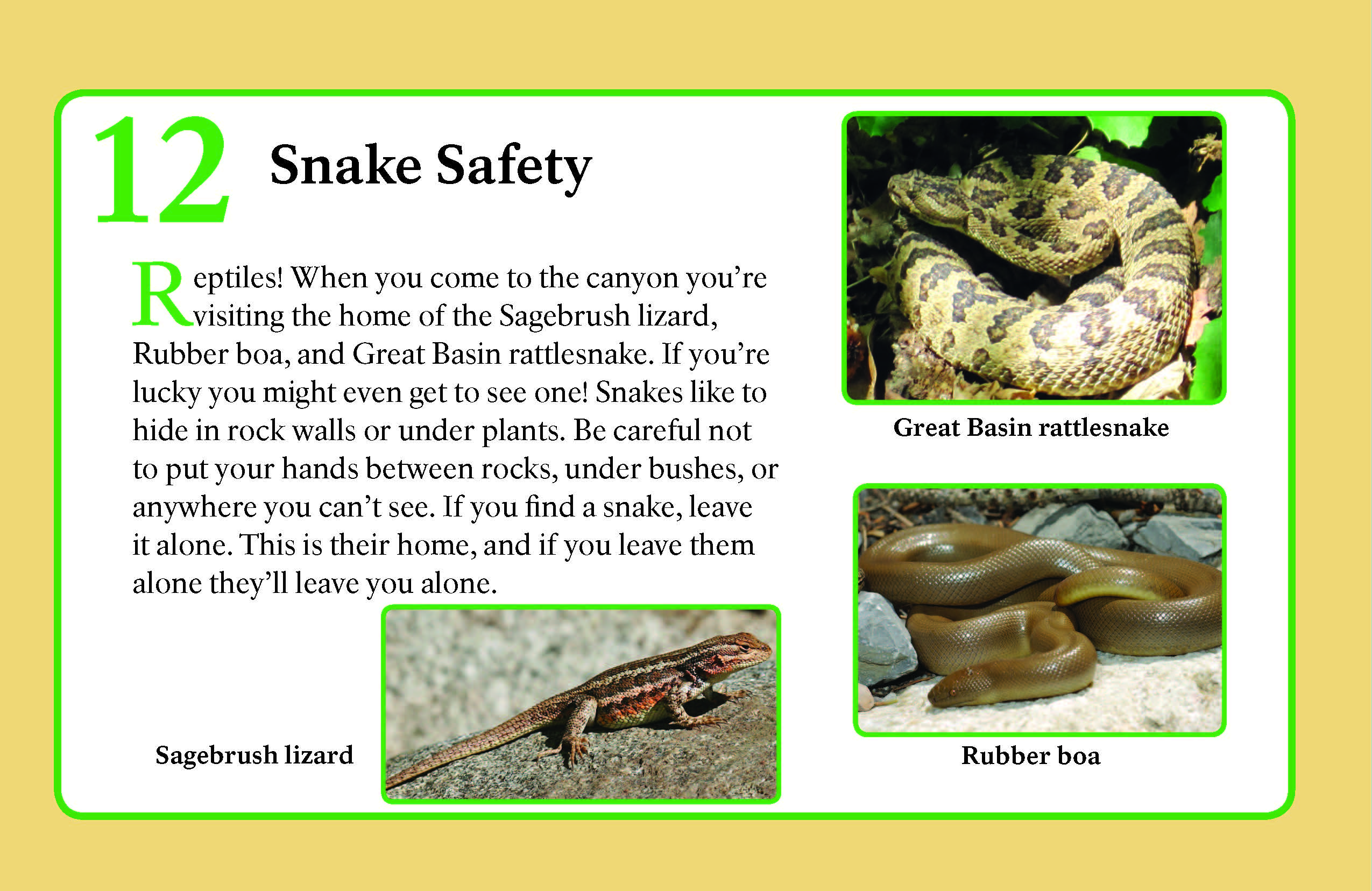
12 Snake Safety Reptiles! When you come to the canyon you're visiting the home of the sagebrush lizard, rubber boa, and Great Basin rattlesnake. If you're lucky you might even get to see one! Snakes like to hide in rock walls or under plants. Be careful not to put your hands between rocks, under bushes, or anywhere you can't see. If you find a snake, leave it alone. This is their home, and if you leave them alone they'll leave you alone.
Along the Way #13
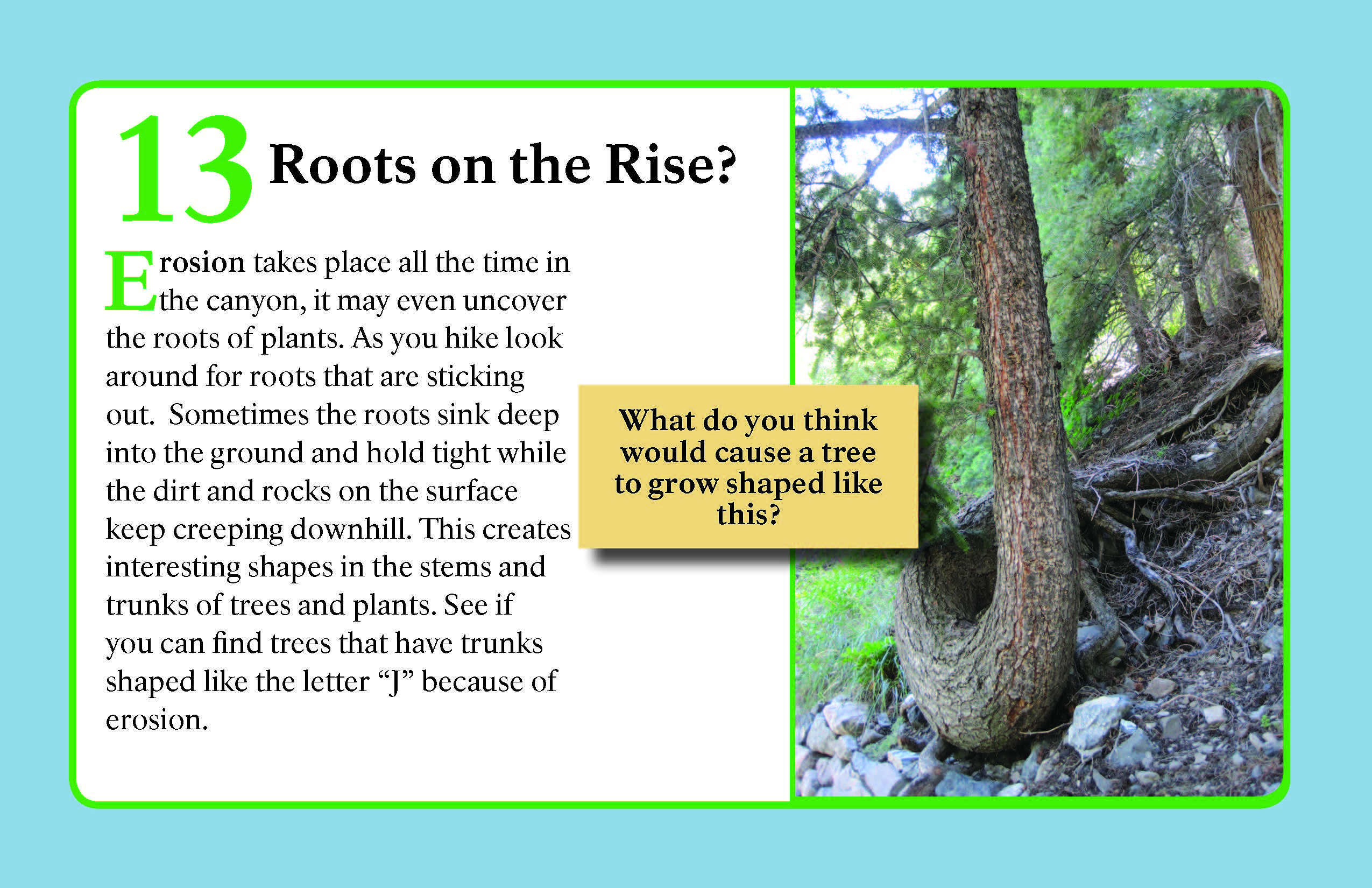
13 Roots on the Rise? Erosion takes place all the time in the canyon, it may even uncover the roots of plants. As you hike look around for roots that are sticking out. Sometimes the roots sink deep into the ground and hold tight while the dirt and rocks on the surface keep creeping downhill. This creates interesting shapes in the stems and trunks of trees and plants. See if you can find trees that have trunks shaped like the letter "J" because of erosion.
Along the Way #14
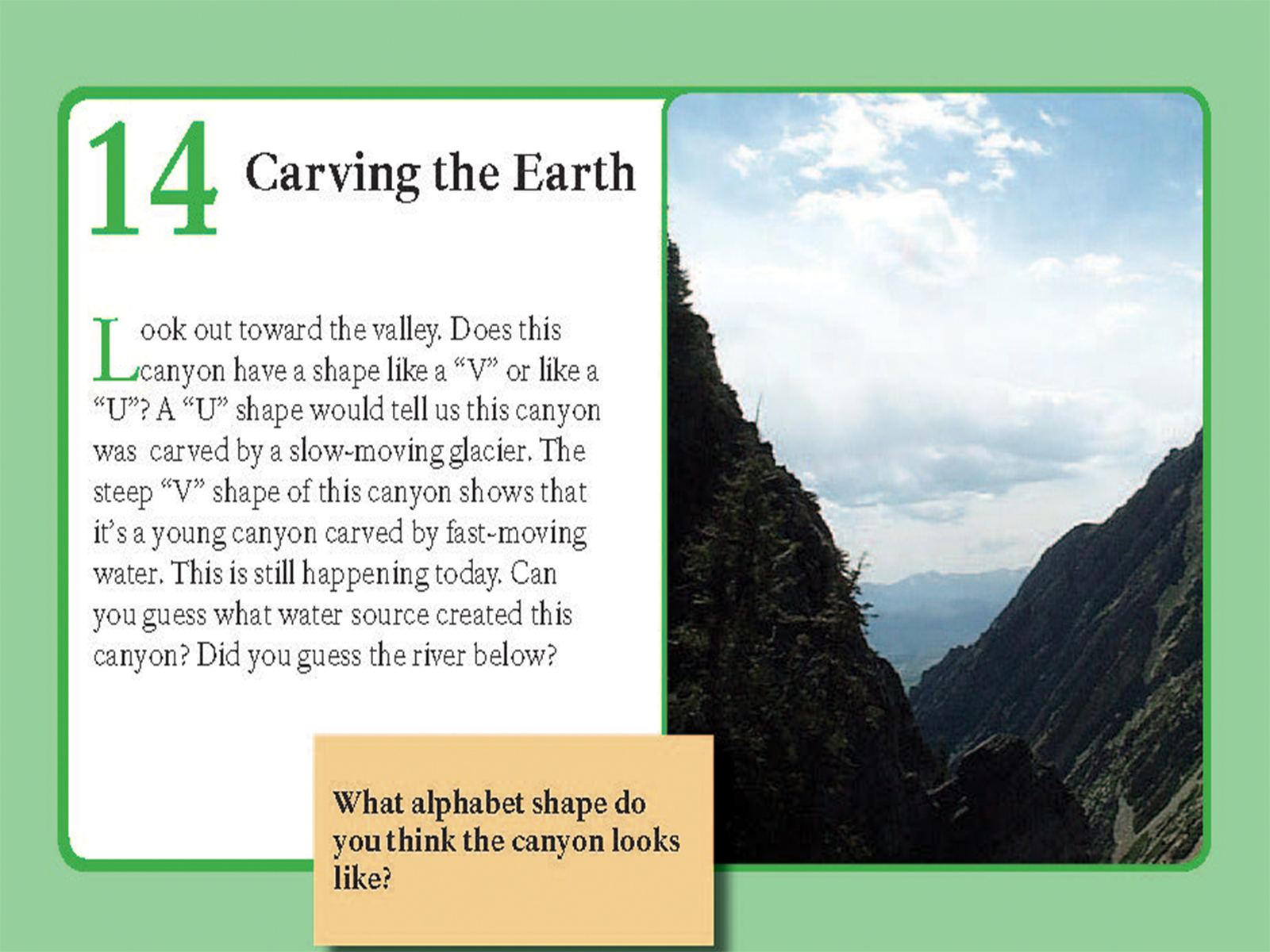
Carving the Earth Look out toward the valley. Does this canyon have a shape like a "V" or like a "U"? A "U" shape would tell us this canyon was carved by a slow-moving glacier. The steep "V" shape of this canyon shows that it's a young canyon carved by fast-moving water. This is still happening today. Can you guess what water source created this canyon? Did you guess the river below?

Along the Way #16
16 Find the Flyers Have you heard any birds as you've walked up the trail? Stop and take a moment to listen for birds nearby. Some birds you might hear are the Canyon wren, Peregrine falcon, Dark-eyed junco, Townsend's solitaire, Western tanager, Steller's jay and Mountain chickadee. Look for these birds and tell your group what birds you are finding!
Along the Way #17
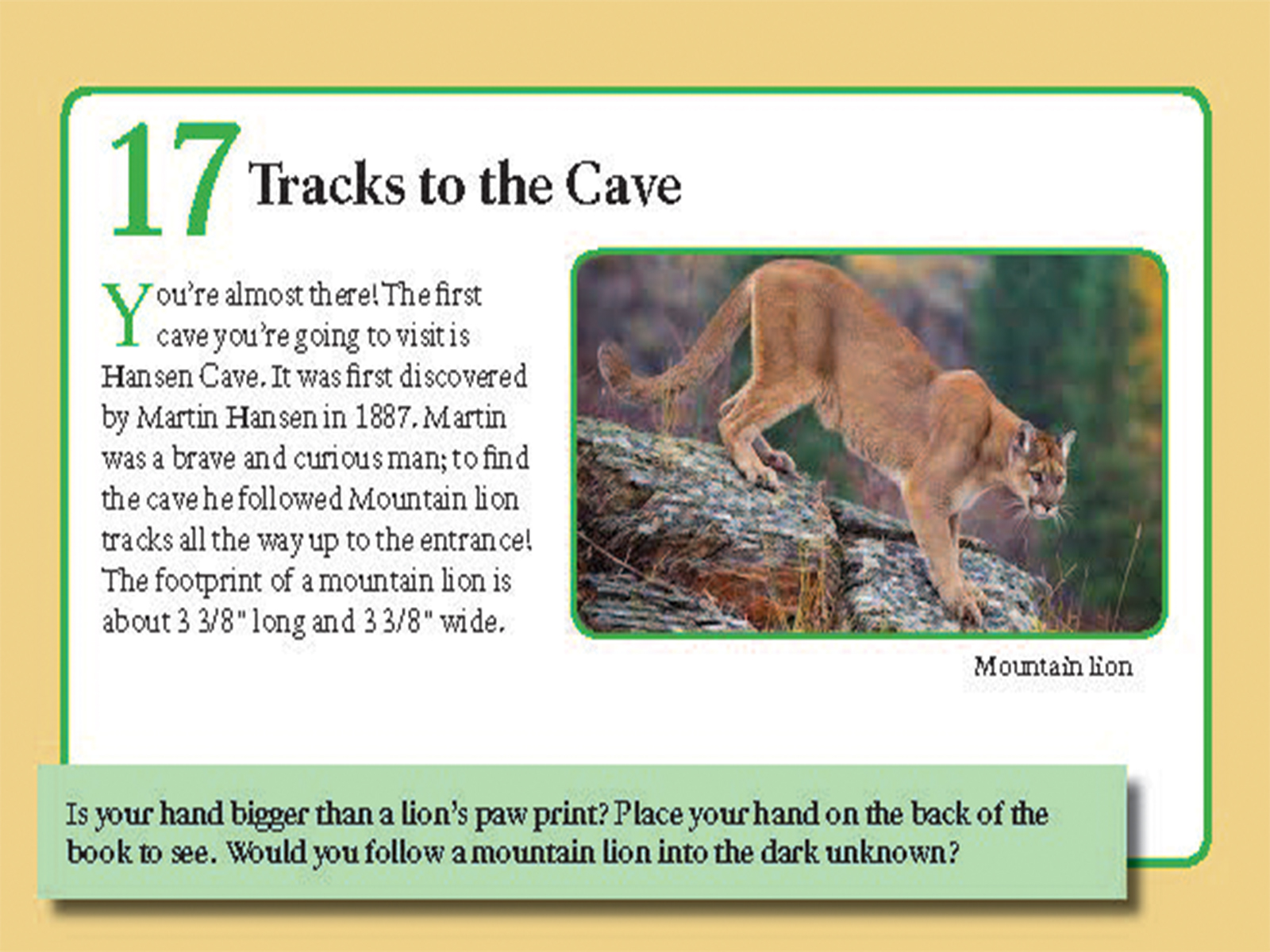
17 Tracks to the Cave You're almost there! The first cave you're going to visit is Hansen Cave. It was first discovered by Martin Hansen in 1887. Martin was a brave and curious man; to find the cave he followed Mountain lion tracks all the way up to the entrance! The footprint of a Mountain lion is about 3 3/8" long and 3 3/8" wide.
Along the Way #2
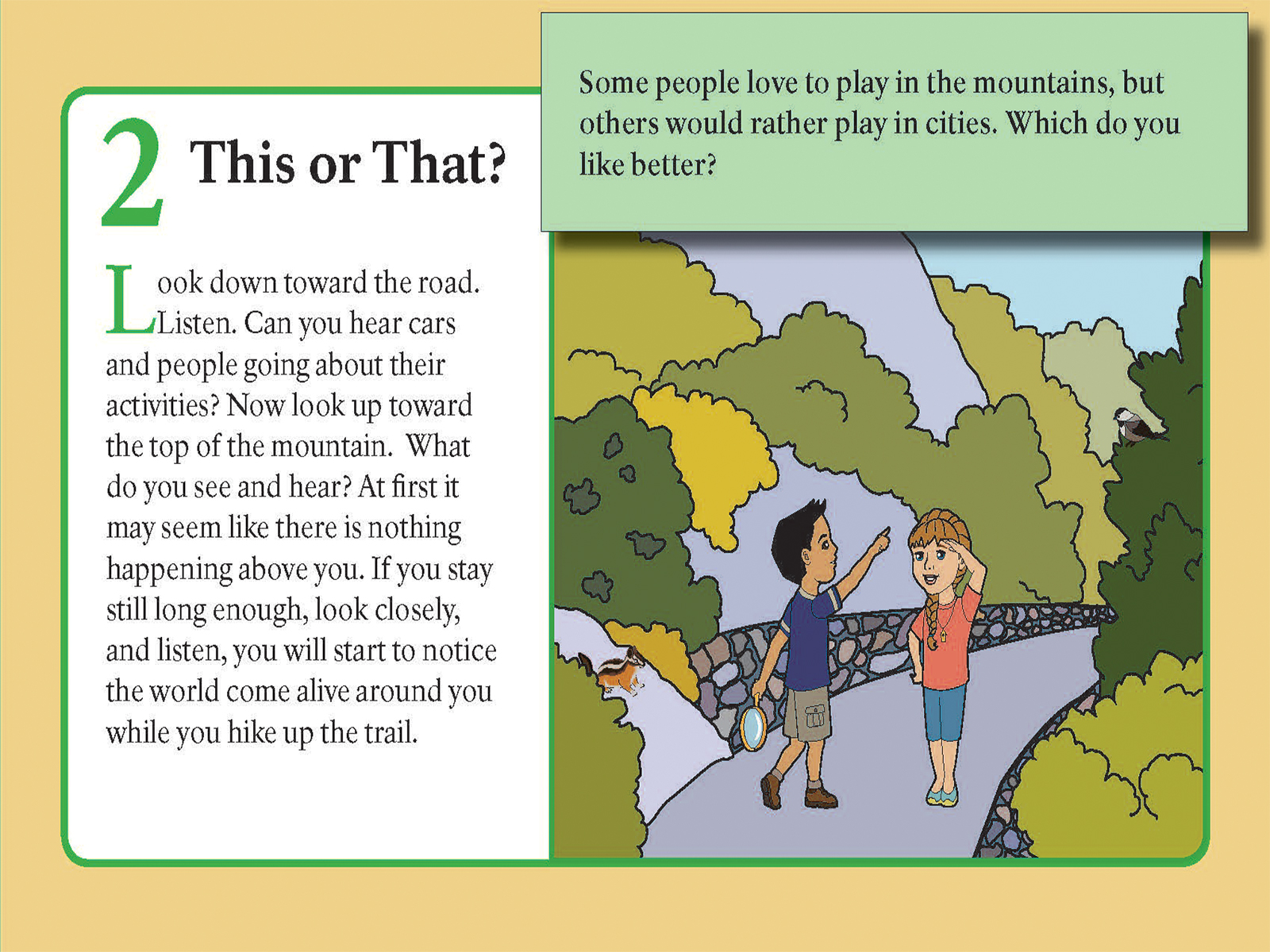
This or That? Look down toward the road. Listen. Can you hear cars and people going about their activities? Now look up toward the top of the mountain. What do you see and hear? At first it may seem like there is nothing happening above you. If you stay still long enough, look closely, and listen, you will start to notice the world come alive around you while you hike up the trail.
Along the Way #3
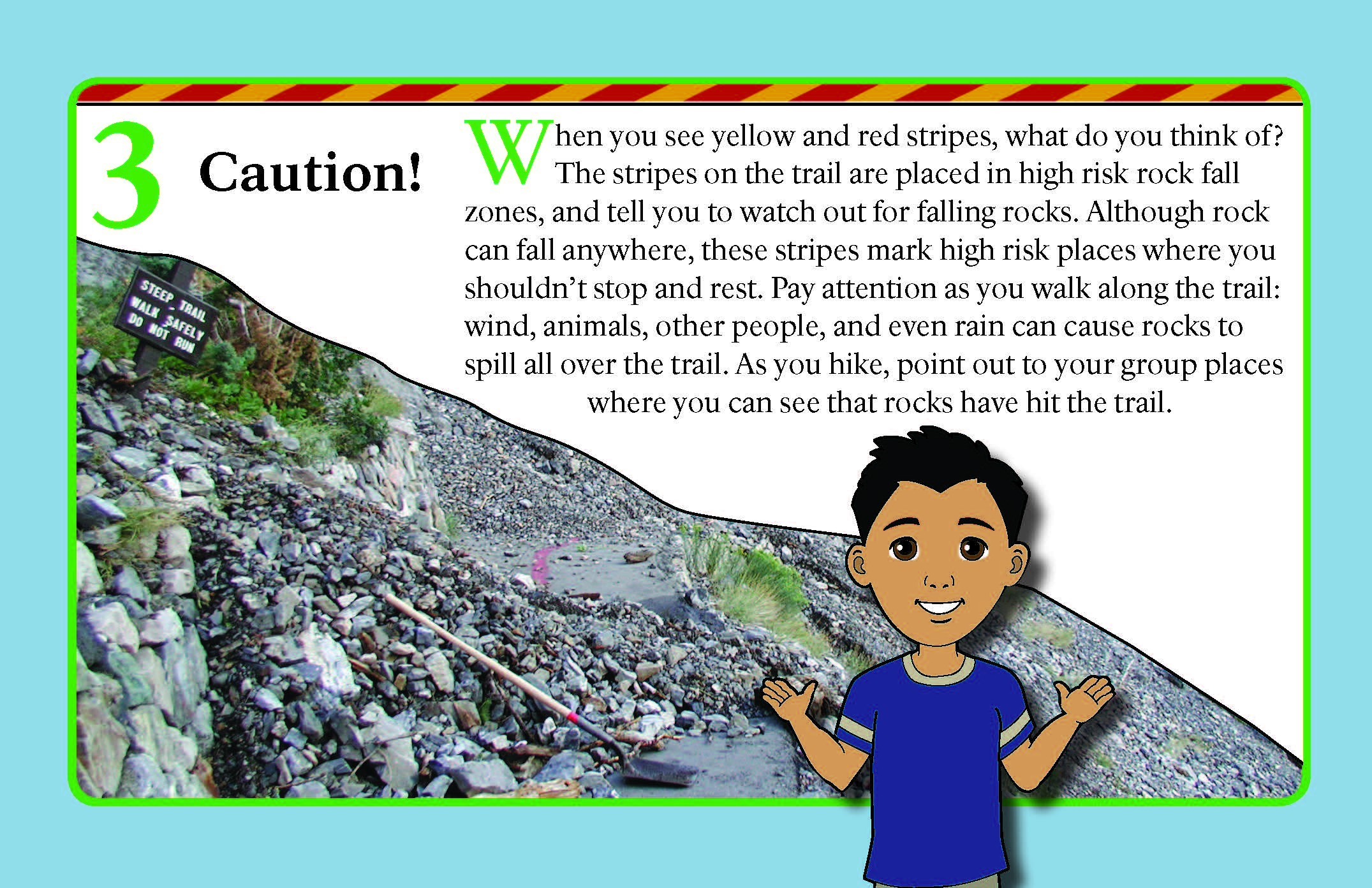
Caution! When you see yellow and red stripes, what do you think of? The stripes on the trail are placed in high risk rock fall zones, and tell you to watch out for falling rocks. Although rock can fall anywhere, these stripes mark high risk places where you shouldn't stop and rest. Pay attention as you walk along the trail: wind, animals, other people, and even rain can cause rocks to spill all over the trail. As you hike, point out ot your group places where you can see that rocks have hit the trail.
Along the Way #6
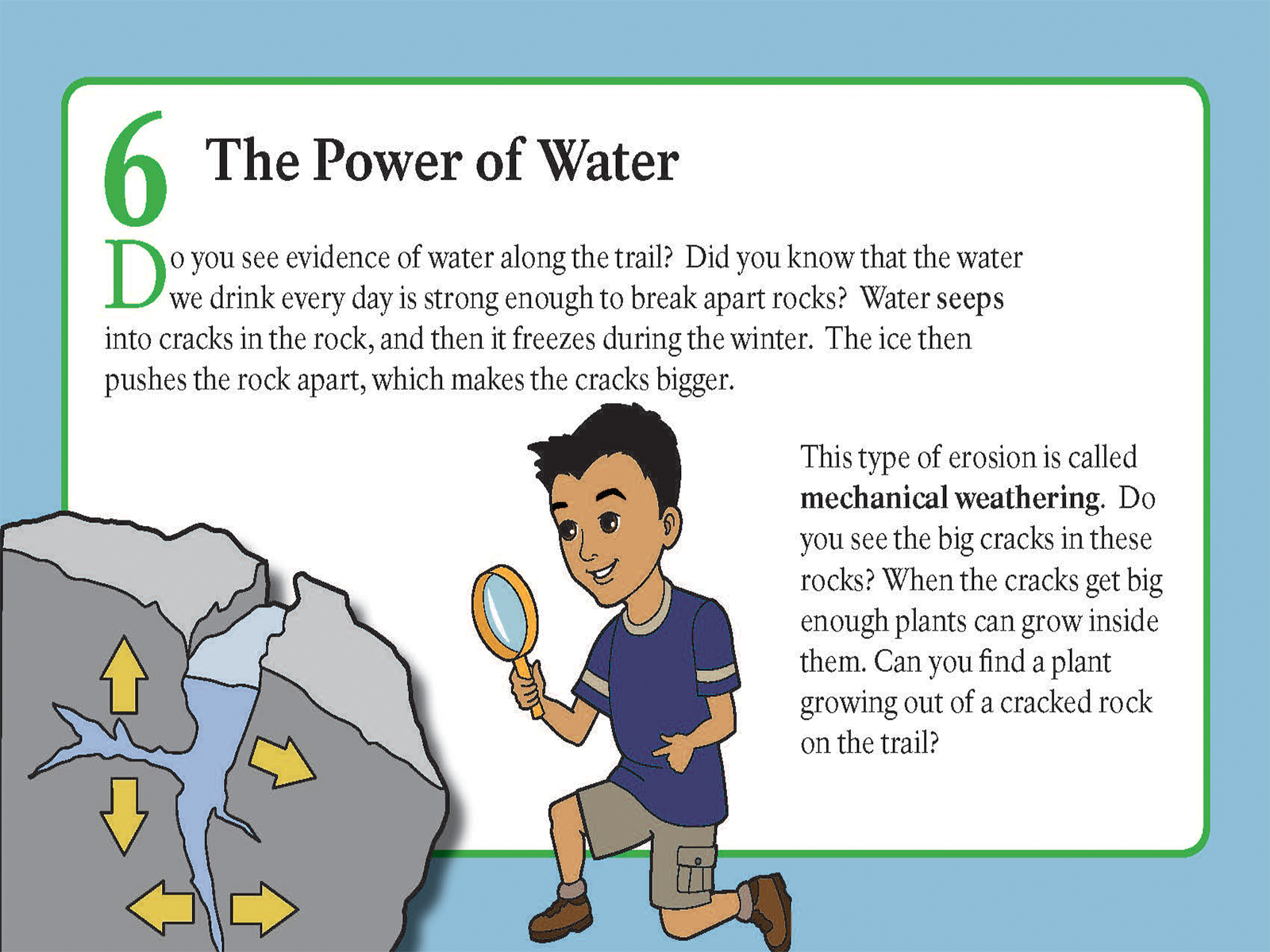
The Power of Water Do you see evidence of water along the trail? Did you know that the water we drink every day is strong enough to break apart rocks? Water seeps into cracks in the rock, and then it freezes during the winter. The ice then pushes the rock apart, which makes the crack bigger. This type of erosion is called mechanical weathering. Do you see the big cracks in the rocks around you? When the cracks get big enough plants can grow inside them. Can you find a plant growing out of a cracked rock on the trail?
Visitor centers
Park stories
Park information courtesy of the National Park Service Data API.